As expenses rise, hospitals are staring at a syringe and catheter supply problem.
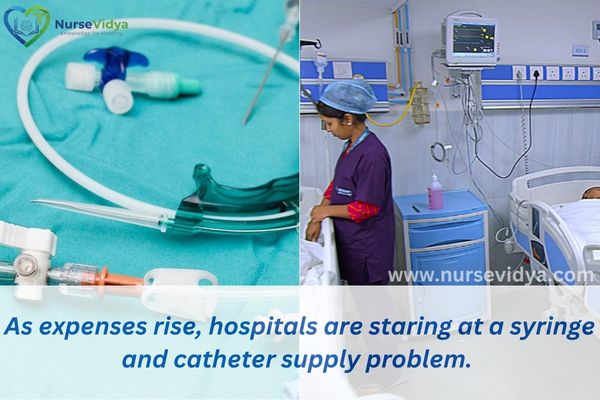
Even if India's hospitals aren't now dealing with empty shelves, the nation's healthcare system is receiving a warning
In a letter to Commerce and Industry Minister Piyush Goyal on Monday, the Association of Indian Medical Device Industry (AIMDI) described how international geopolitical tensions, especially the blockade of the Strait of Hormuz because of the Iran war, are putting pressure on domestic producers of vital medical supplies, primarily high-volume items like gloves, syringes, and catheters.
Industry leaders have warned that the consequences may soon be felt at the patient's bedside.
SUPPLY SHOCK RISKS
A significant increase in input costs and supply chain interruptions are at the core of the issue.
Critical plastic costs have increased by about 50% for high-volume medical disposables including nitrile gloves, catheters, and syringes.
Gas prices have almost doubled for some factories, and packaging and diesel-based electricity costs have increased by more than 20%. The viability of supplying daily hospital necessities is directly impacted by these increases, which are not insignificant.
Manufacturers maintain that there isn't a shortage right now.
Supply lines are operating, albeit under pressure, and warehouses are still filled.
The industry has cautioned that if interruptions continue, production slowdowns may soon result in hospital supply shortages.
HOSPITAL EXPENSES
Hospitals will be significantly impacted. According to the letter from Rajiv Nath, the coordinator of the AiMed forum, procurement costs for hospitals are increasing because manufacturers are already raising prices by 10–20 percent to stay in business.
Private hospitals might be compelled to transfer the cost to patients, whereas public hospitals with limited funding might find it challenging to absorb these increases.
Syringes and catheters are essential pieces of equipment for everyday care, from handling critical conditions to giving medication. Treatment delays, higher out-of-pocket costs, or the need for replacements that might not be up to par are all concerns associated with any prolonged price increase or supply disruption.
However, the cushion is getting thinner. Buffer supplies are being depleted, and shipment delays that were previously tolerable at one to three weeks are getting longer.
Patients are likely to suffer the most, especially those in low-income categories. Over extended hospital stays or long-term treatments like dialysis or cancer care, even slight increases in the cost of consumables might add up to a substantial amount.
In light of this, AiMeD has called on the government to intervene with focused measures. One of the main demands is the rationalization of inland logistics costs, with a particular request that container shipping fees be kept constant during the crisis.
Due to an inverted duty structure, the business has also emphasized the urgent need to expedite pending GST refunds, which are strangling working capital.
Avoiding lowering import taxes on completed medical products is another crucial request.
The sector contends that such a move would hurt domestic manufacturers already struggling with increased costs, even though it could seem to alleviate shortages. To stabilize production, they have instead suggested short-term import tariff rebates on components and raw materials.
In order to guarantee continuous production cycles, manufacturers are also looking for operational flexibility, such as authorization for force majeure clauses in government tenders and more uniform gas supply allocations.
Related News
Cognitive speed training may be able to postpone dementia by 20 years.
Heart disease is more common in late sleepers, and it is largely avoidable.
Anxiety and Depression May Be Linked to Cardiovascular Disease via Stress